Sunday, February 15, 2009

Constipation


Constipation

It’s embarrassing, uncomfortable, and irritating and it affects over 4 million people in the United States regularly!

What can we do about it? It’s important to understand the possible reasons behind it and why it is important to eliminate properly and on a regular basis.
Americans tend to eat a higher ratio of meat, dairy, and bread and while eating very little fruits and vegetables. For this reason little dietary fiber is consumed. At the same time Americans tend to drink soft drinks or juices over water. With these two actions combined, constipation is bound to happen (pun intended!) As well, the disproportion of animal products and vegetables upsets the normal balance of bacteria in the bowel.

It is important to eliminate large, formed, moist stools every day. For one, it is our bowel that absorbs nutrients. The small intestines have the incredible job of breaking down and distributing nutrients from food to all of our body. The small intestine consists of the duodenum where absorption of minerals takes place. Next is the jejunum where water soluble vitamins, carbohydrates, and proteins are absorbed. Lastly, the ileum is where fat soluble vitamins, fat, and cholesterol are absorbed. By the time food passes to the large intestine or the colon, water and some final electrolytes are absorbed. It is here that what is remaining waits to be eliminated. This is the waste products of what was eaten. While it is sitting here, bacteria are continuing to break it down.

The types of foods eaten determine the health of the large intestine. A diet high in fiber helps aid in the proper breakdown of waste products and also the proper elimination of wastes and toxins from the body. Putting it bluntly, if we do not eliminate our wastes, they start to be reabsorbed back into the blood stream, back up into the small intestines and begin burdening the liver, pancreas, and gall bladder. There are an estimated 148,000 annual cases of colorectal cancer in the United States! ( 107,300 annual cases of colon cancer and 41,000 annual cases of rectum cancer (SEER 2002 estimate).

What we can do!/strong

Eat a balanced diet of whole foods including fresh vegetables, fruits, legumes, and whole grains.

• Drink a glass of warm water upon arising from sleep to stimulate the bowel.
• Drink plenty of water throughout the day.
• Supplement with a whole food vitamin being sure to include magnesium and vitamin C.
• Add ground flax seed to baked goods, sprinkle over cereal or yogurt.
• Alternate psyllium with Triphala, (an Ayurvedic herb) to assist in elimination and bowel cleansing
• Take a pro-biotic supplement to balance the bacteria in the bowel.

Thursday, January 29, 2009

What's For Dinner?


I got this giant zucchini from a Biodynamic Winegrower in Drycreek Valley, Sonona and made the Zucchini Parmisano with quinoa flower and a tomato, fennel, basil, sauce served over pasta. Ciao, Telly

Wednesday, January 28, 2009

Telly's hungry. Let's Eat!


Nicole just made Gigantes which she will finish with feta and serve Greek Lemon Patates. Yiasou.

Monday, December 1, 2008

Digestive Health

Before I started studiing nutrition seriously, I began reading Bernard Jensen’s, Tissue Cleansing through Bowel Management. This remarkable book made me think differently about the disease process. Having been trained in conventional Western medicine as a nurse, I was taught to treat disease. More specifically, we have been taught to treat symptoms of disease. What I’ve learned from this book and other classes is that the root of many diseases actually comes from autointoxication. This is when toxins from food or environment are not eliminated from our bodies and in turn make us sick. Secondary to that, if the intestines are blocked or backing up, it makes absorption of vital nutrients more difficult. Blood to the colon begins to pick up toxins, or poisons from the bowel wall and deposit them back into the bloodstream. Constipation is the main culprit in autointoxication. Most people, including physicians think that if one stools once every one to two days, that this is sufficient. The fact is, that it is extremely important to eliminate after every meal one eats. It takes 18 hours from the time one eats a meal for it to go through the entire digestive process and be eliminated. Food or warm water in the stomach stimulates the bowel and assists in elimination. That’s why it is very important to drink warm lemon water upon waking in the morning, to stimulate undigested food in intestines and assist in elimination, before putting more food in the system. Another major problem with most people’s bowel is the lack of proper intestinal flora. Meat, coffee, sugar, alcohol, and many processed foods kill lactobacillus acidophilus (which need an acidic bowel) and feed bacillus coli (which love an alkaline bowel). In a normal healthy bowel, one should have 80% lactobacillus acidophilus and 20% bacillus coli. Most people on a western diet are the exact opposite, opening up a window for disease. In Bernard Jensen’s years of study, he found that people whose diets included fermented milk or yogurt (containing acidophilus), lived the longest. Having read this book, I did implement changes in my diet. Of course, every morning, I start off drinking luke warm purified water, at least one glass. A couple times per week my breakfast consists of a cup of Kefir (type of yogurt containing a higher protein, lower carbohydrate than regular yogurt). I sprinkle ¼ cup of ground flax seed on this drizzled with Agave nectar for sweetness. Alfalfa tablets may be taken after meals to provide natural fiber bulk. We should attempt to drink two liters of water everyday. For exercise, try to walk at least three times a week and the other days do stretches. Dr. Jensen is a firm believer in slant board exercises which get blood to your head and take some of the pressure off the bowel. When doing stretching, try poses which get the feet up in the air. Dr. Jensen’s book also discusses the benefits of colonics, fasting, juicing, broths, and enemas. Overall, it is important not to overlook our intestinal health.

Wednesday, October 29, 2008

Show Me The Food!

OK! You Keep Talking About Food. Bring it on!


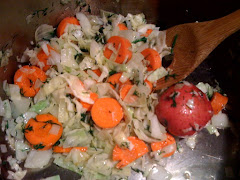
People are always telling me that they couldn't possibly be a vegetarian because they would feel so weak and not have any energy. My feeling is that being a vegetarian for most people means taking the meat out of their cheeseburger at McDonald's and finishing off that bun with fries and a coke. So, sure. There is very little energy there except the short sugar high immediately afterwards. Most people are not sure how to start or what veggies to prepare. The concept of a meal with out the main dish being a meat is strange but with some education can be overcome. Learning how to balance your meals takes a little skill and some practice but can be seen as an exciting challenge.

My brother and I (and his beautiful wife) are always sharing recipes and especially photos of what exciting new dishes we have prepared. So, I was thinking about writing a cookbook with him. We both love nutritious whole food and taking pictures. Then I realized, that posting our photos and recipes here would be ideal. People are always asking me what I eat and how I cook it. So here it is. I will start by posting some of our beautiful dishes from the past year. We'll see how it goes. Enjoy...


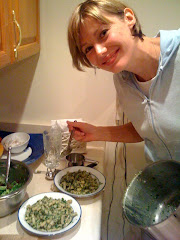
The first photo is Greek Style Green Beans in a tomato, garlic,onion, and dill base.

The second photo is a pot of freshly picked pink eyed peas. I sauteed garlic, onion, and Swiss chard and then simmered the peas in that mixture.

The third photo is an creamy Italian mushroom risotto.

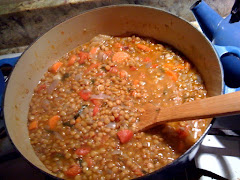
The next photo is a pot of yellow lentils not fully cooked.

Of course, the next picture is a Greek salad; cucumbers, tomatoes, and green onion drizzled with virgin olive oil but without the feta cheese!

The final photograph features rosemary hummus with rice crackers.

Sunday, August 3, 2008

Bioflavanoids or Vitamin P

Researchers have reported thousands of Bioflavonoids. Also known as flavonoids, they are a class of plant secondary metabolites. They are the natural pigments in fruits and vegetables. Citrus bioflavonoids are found in citrus fruits such as Hesperidin,and Rutin(Quercetin). Anthocyanins are flavanoids that provide red and blue colors in flowers and fruit. Proanthocyanins such as Bilberry are found in tea, wine, bark, grape seed. Pycnogenol, an Isoflavone contain daidzein and genistein and are found in soy and clover.


What Do They Do?

Bioflavonoids enhance the action of Vitamin C and prolong its effectiveness. Vitamin C and bioflavonoids are found in many of the same foods and the body metabolizes both of these in the same manner. Many researchers have discovered that some of the functions that vitamin C is credited with are actually from bioflavonoids. Vitamin C and Bioflovonoids need each other to produce the effects they have on the immune system. Absorption may be slow, but small amounts can be stored in the body. In recent studies, Bioflavonoids have been shown to help maintain capillaries. Isoflavonoids have estrogenic properties and may benefit in menopause. They have an antibacterial effect, and act as natural antibiotics. Some can destroy certain bacteria in foods. They are indicated in the production of bile and may lower blood cholesterol levels and prevent heart disease. They are used in the prevention and treatment of cataracts Bioflavanoids are effectively used in the treatment of sports injuries for pain relief. They may lessen the symptoms of prolonged bleeding, lower serum calcium, and assist with quelling oral herpes exacerbations. They are known to assist in fighting allergies and asthma. Bioflavanoids may as well prevent cellular damage caused by free radicals. They are useful in enhancing the antioxidant action of certain nutrients. They may stop or slow the growth of malignant cells, and help protect against cancer causing substances from invading the heart and blood cells.


Where Are They Found?

Bioflavonoids are found in the white material just beneath the citrus peel! Here is a list of plants high in bioflavanoids : pine bark, garlic, broccoli ,berries, citrus fruit, peppers, onions, black currant, buckwheat, cantaloupe, grapes, green tea.


Deficiencies/Recommended Daily Allowance/Toxicity

If a diet contains enough fruits and vegetables, bioflavonoids should not be deficient. A deficiency would show up as bruising, vascular degeneration, capillary fragility, nosebleeds, periodontal bleeding, varicose veins, hemorrhoids, and aneurysm. No dosage has been determined but 500 mg per day is indicated for supplementation. Very high doses of bioflavonoids may cause diarrhea. Copper is the most common and potent inhibitor of hesperidin and Vitamin C. Molybdenum and sulfur support hesperidin uptake. Chromium inhibits Rutin. Vanadium and Selenium support Rutin uptake.

Monday, July 21, 2008

Growing Herbs


Being Greek means that life generally revolves around food. As a child I remember my grandmother salting the fresh eggplant in the colander preparing it for the pastitsio. We watched and learned from a young age how to use fresh herbs like mint for the spanakopita or lentils; and oregano for just about everything. When visiting the island, Chios, where our family is from, we would go pick our own oregano as it grows wild as a weed in the mountains. The first time I ever saw an artichoke was on its stalk, deep purple and beautiful, in my grandfather’s garden. Really, there is nothing quite like a horiatiko (village) salad of ripe tomatoes, cucumbers, oregano, feta and olive oil. My mouth is watering just thinking about it. My memories are so vivid, colorful and tasty!Today I grow my herbs in pots outside my front porch. I grow oregano, lemon thyme, and sage. I also enjoy hearty lavender and in early spring usually grow dill as well. I cut fresh dill everyday that I can, into fresh greens. This is another traditional Greek salad. It is dressed with olive oil, lemon, and salt. You can add green onion to taste. This salad is so fresh with a distinctive taste, I often get complimented on it. I am so addicted to it that in the winter I cheat and use dried dill.I have three different kinds of basil; large leaf Sweet Italian, large leaf purple called Red Rubin Basil, and the small leaf Greek called Minette Basil. I tend to not allow them to flower as the leaves become bitter once it goes to seed. In winter I bring them inside to a sunny spot and keep them year-round. I trim the basil plants monthly in summer and enjoy a fresh pesto on those days. In the food processor or mini chopper, I put the leaves of all three types of basil (as many leaves as can fill the processor bowl), about a half cup of olive oil, ¼ cup freshly grated parmesan or piave cheese, 2-3 cloves garlic, and sometimes pine nuts, if I have them. You have to experiment with the amount of olive oil, because the pesto can be too dry if there’s not enough. The leaves tend to absorb it. It goes superbly on fresh, hard crusted semolina bread, although in our house we just eat it by the spoon.Interestingly enough, Greeks don’t eat basil the way Italians do. (I’m half Italian, by the way). Basil has theological significance to the Greek Orthodox Christians. Holy Tradition states that when St. Helen found the True Cross of Christ, she knew it because Sweet Basil was growing around it. On September 14th in Orthodox Churches around the world, old grandmothers (Yiayias) bring their basil to church to adorn the cross that the Priest will use in a procession with around the church. Then the Priest blesses everyone with the cross and with the basil. The women then take home the now blessed basil to make bread that will be used for Holy Communion. They mix salt, flour and water and make their dough. Then they make the sign of the cross with their blessed basil over the dough and miraculously, the dough rises without yeast! This is done every year all over Greece. As you can see, herbs are very important in the Greek culture. It really is a part of life. My house is not a home with out my potted herbs on my front porch.